Discovering Harmony Through Ikebana: The Japanese Art of Flower Arrangement


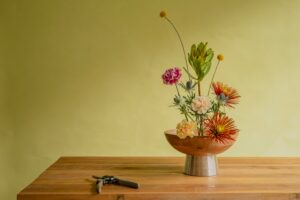
Ikebana, the traditional Japanese art of flower arrangement, is more than simply placing blooms in a vase. It is a disciplined art form rooted in harmony, balance, and minimalism. Unlike Western floral arrangements, which often focus on the abundance of color and fullness, Ikebana emphasizes the natural beauty of each element: flower, stem, leaf, and branch by showcasing its unique characteristics and placement. Practiced for centuries, Ikebana serves not only as a form of artistic expression but also as a meditative practice that connects the arranger with nature and mindfulness.
The essence of Ikebana lies in finding the perfect balance between line, space, and form. This thoughtful placement of natural elements creates arrangements that evoke serenity and contemplation. It teaches patience, encourages awareness, and brings a sense of peace to both the artist and the viewer. Through its quiet beauty, Ikebana invites us to appreciate the simplicity and depth of nature, encouraging a slower, more intentional approach to living.
The Roots of a Spiritual Practice
Ikebana has its origins in the 6th century, when it was introduced to Japan with the arrival of Buddhism. Used initially as floral offerings at altars, the practice soon evolved into a formalized art known as “kado,” or “the way of flowers.” These early arrangements were meant to symbolize spiritual harmony and to reflect an appreciation for the impermanence of life. The placement of each stem was a sacred act, mirroring the arranger’s internal state and reverence for nature.
Over time, different schools of Ikebana emerged, each with unique philosophies and styles. The Ikenobo school, established in Kyoto, is the oldest and one of the most influential. It emphasizes traditional structures and spiritual depth, while more modern schools like Sogetsu and Ohara offer greater creative freedom and adaptability to contemporary settings. Regardless of style, the underlying intent remains the same: to express harmony between humanity and the natural world.
Principles That Guide the Art
The foundation of Ikebana lies in a set of guiding principles that shape both the physical arrangement and the mental discipline required. Among these principles are asymmetry, minimalism, and the use of negative space. These elements work together to highlight the beauty of imperfection and the fleeting nature of life. Unlike symmetrical Western designs, Ikebana relies on uneven compositions to create visual interest and a sense of movement.
Central to every Ikebana piece are the three main lines that represent heaven, earth, and humanity. These lines are carefully chosen and placed to create a dynamic, balanced structure. Heaven is typically defined by the tallest branch, earth by the shortest, and humanity by the one that connects the two. This symbolic triad fosters a deep connection to the universe, reminding the artist of their place within it.
Tools, Techniques, and Materials
Creating an Ikebana arrangement requires specific tools and materials, each chosen with intention. Traditional tools include “kenzan” (a metal pin holder used to anchor stems), pruning shears, and shallow containers. These instruments help the arranger control every detail, from the angle of a branch to the way light passes through a leaf. Precision and care are vital; even a single misplaced stem can disrupt the harmony of the whole.
Materials in Ikebana are not selected merely for their visual appeal but also for their seasonality and symbolism. A curved branch may suggest resilience, while a single bud might represent hope or new beginnings. Flowers, twigs, moss, and even stones can be used, with each element playing a role in the overall message. The deliberate combination of materials allows the artist to tell a story or convey an emotion through form and space.
Modern Expressions of Ikebana
Though steeped in centuries-old tradition, Ikebana continues to evolve in the modern world. Contemporary practitioners experiment with non-traditional materials such as glass, metal, and plastic, blending classical techniques with modern aesthetics. These interpretations allow Ikebana to thrive in diverse environments, from minimalist homes to bustling city galleries. The adaptability of the art form speaks to its timeless appeal and relevance.
In addition to aesthetic innovation, Ikebana is being recognized for its therapeutic value. Many find that the mindful nature of the practice promotes mental clarity, reduces stress, and fosters emotional balance. As modern life becomes increasingly fast-paced and technology-driven, Ikebana offers a gentle counterbalance to a return to simplicity, contemplation, and connection with the living world around us.
Ikebana and the Philosophy of Wabi-Sabi
At the heart of Ikebana is the Japanese aesthetic of wabi-sabi, which celebrates transience and imperfection. Wabi-sabi teaches us to find beauty in things that are simple, weathered, or incomplete. In Ikebana, this philosophy is visible in the use of asymmetry, irregular forms, and space. These elements highlight the organic and ever-changing nature of life, inviting reflection and appreciation for the present moment.
An Ikebana arrangement is never permanent; it changes with time as flowers bloom and fade. This ephemeral quality is not seen as a flaw but as an essential part of its beauty. The process reminds practitioners to accept change gracefully and to appreciate fleeting moments. In this way, Ikebana becomes more than art; it becomes a quiet lesson in mindfulness and acceptance.
Learning and Practicing Ikebana Today
Ikebana is accessible to anyone willing to learn, whether through formal classes, workshops, or self-guided exploration. Many schools around the world offer instruction, and some even provide certification programs. Beginners often start with simple arrangements, learning to recognize line, shape, and space before progressing to more advanced techniques. While it requires patience and practice, the journey itself is rewarding.
Practicing Ikebana at home does not demand a large garden or exotic plants. Even the most basic materials, a few wildflowers, a twig, a small dish, can become a source of inspiration. What matters most is the mindset: a willingness to observe, listen to nature, and approach the process with respect and care. In doing so, the arranger taps into a centuries-old tradition that remains deeply relevant in the modern age.
A Lasting Impression of Nature’s Poetry
Ikebana is a powerful reminder that beauty often lies in simplicity. It is not about extravagant displays or perfectly shaped blooms but about honoring each element’s essence and how it contributes to the whole. Through thoughtful design and symbolic meaning, Ikebana offers a poetic expression of life’s natural rhythms and cycles.
In a world filled with constant noise and distraction, Ikebana provides a quiet refuge. It encourages presence, mindfulness, and a renewed appreciation for the world around us. Whether viewed as a meditative practice, a creative outlet, or a spiritual expression, Ikebana remains a timeless art form that continues to inspire, comfort, and connect.